
Bird Bonanza: Multi-Frame Framed Wall Art Thatll Make Your Walls Sing
You may also like

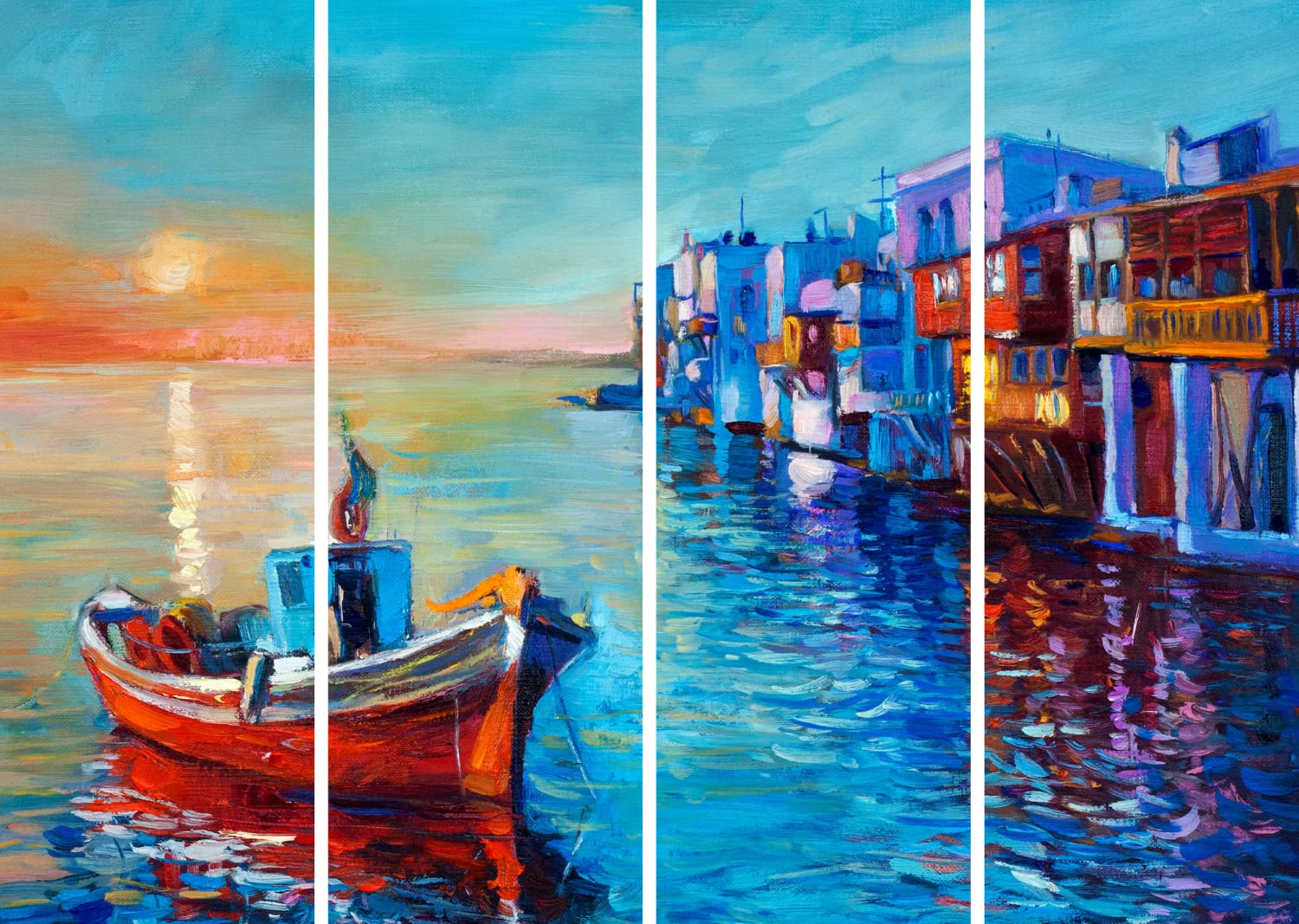
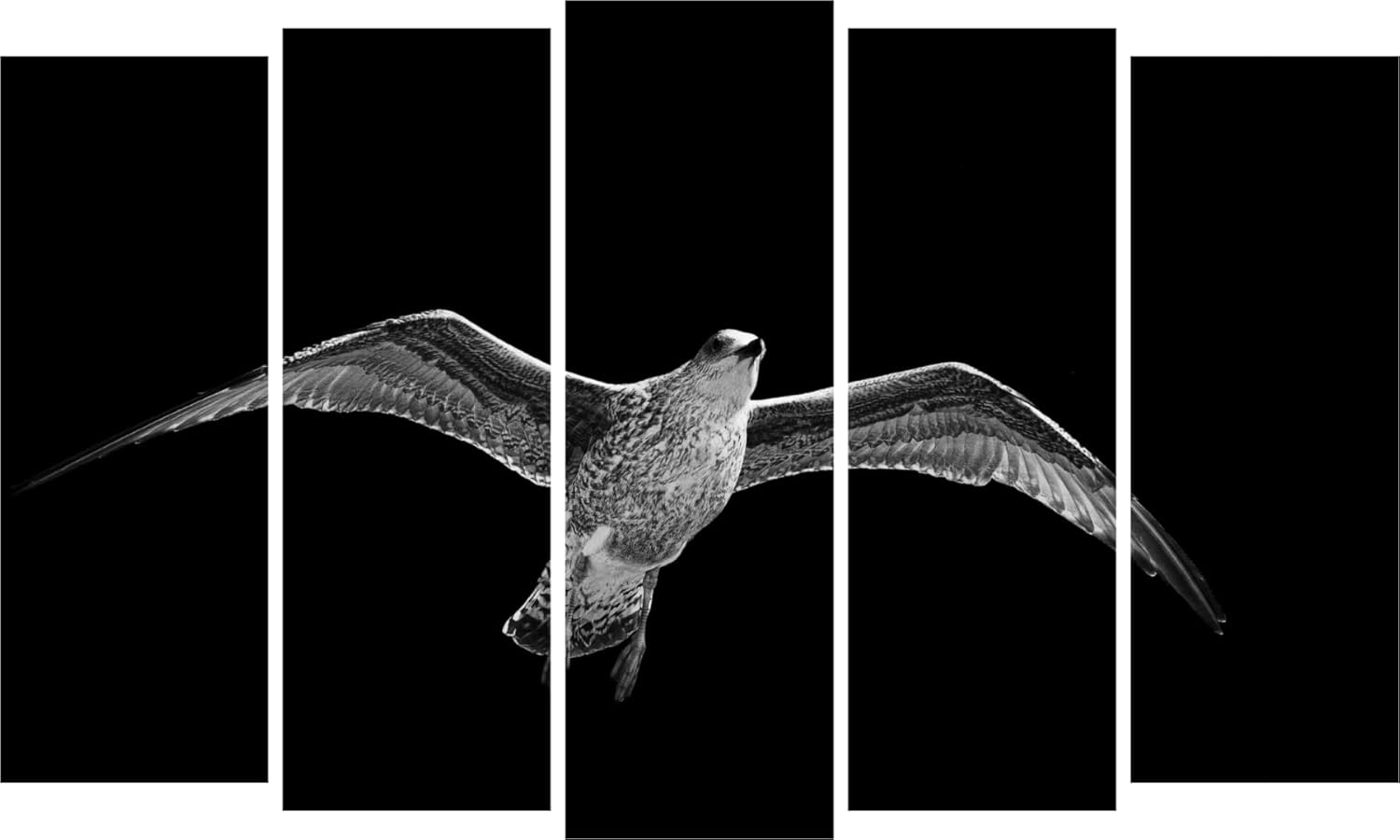
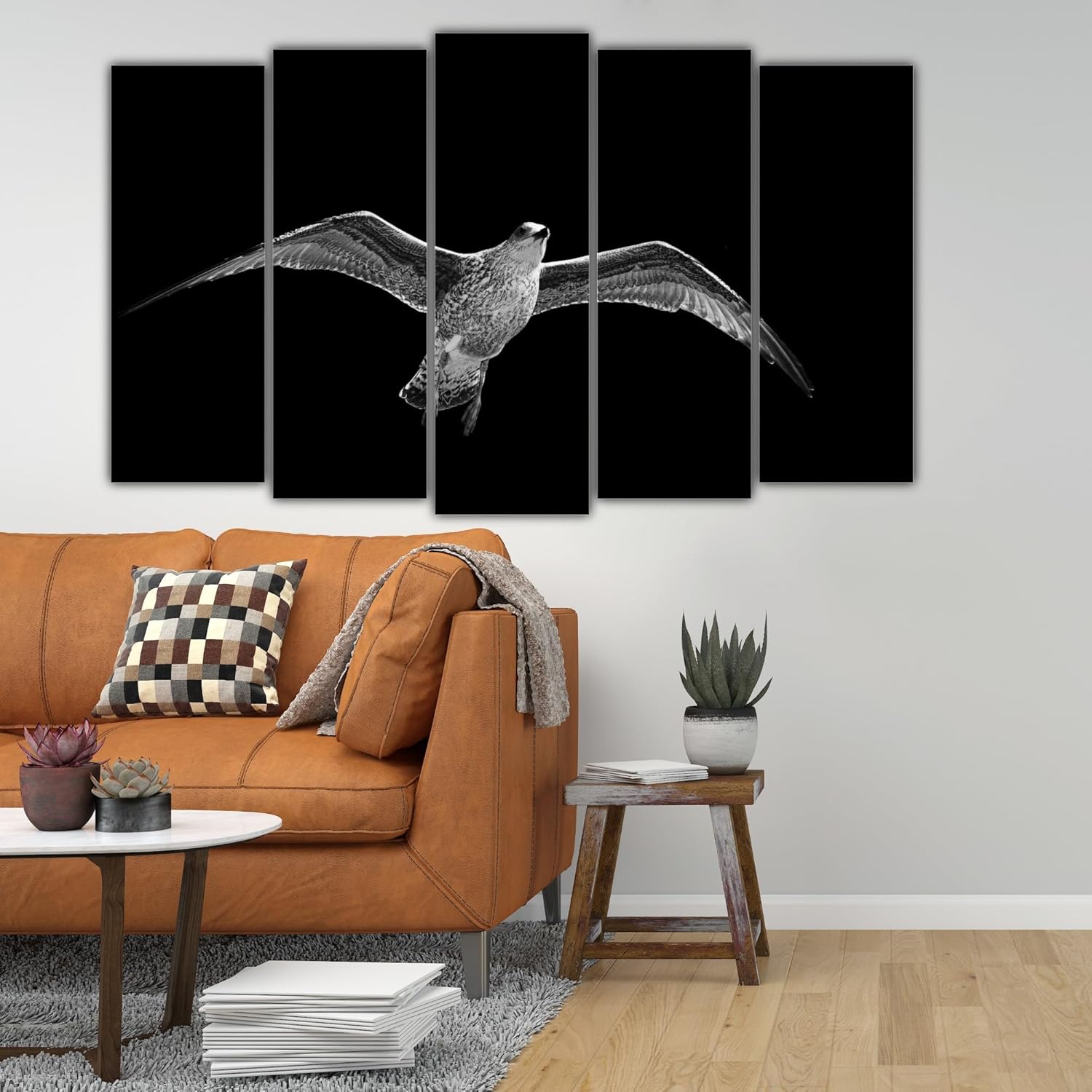
Moolwan 5-Panel Bird Flight Canvas Wall Art Painting (127x76cm) - Multi-Frame Monochrome Nature Art
You've measured your living room wall three times. Maybe four. The tape measure says 360 cm, but you're still not confident because the wall has that window on one side and the sofa cuts the visual space. Every decorating guide says something different, and none of them account for Indian apartments where 10-foot walls aren't the standard—8 to 9 feet is. You keep second-guessing: is 127 cm actually right, or will it look lost on a 12-foot wall?
Here's what the numbers actually tell you: this 127 cm bird flight canvas covers roughly 35% of a standard 12-foot (360 cm) wall. That leaves approximately 116 cm of breathing space on each side—enough to feel intentional, not cramped. The 76 cm height sits comfortably between eye level and the ceiling without crowding either. For a wall above an 8-foot sofa, this creates the proportional balance that looks designed, not random.
The Visual Math: How 127cm Fits 12ft Walls in Indian Homes
Your wall is probably somewhere between 10 and 14 feet wide. Let's calculate what this 127 cm 5-panel bird canvas actually covers:
On a 10-foot wall (300 cm), you get 42% coverage—116 cm total negative space, 58 cm on each side. Slightly bold, works best with minimal other decor.
On a 12-foot wall (360 cm), you get 35% coverage—233 cm total negative space, 116 cm on each side. The sweet spot for most Indian living rooms where sofas are 6-8 feet wide.
On a 14-foot wall (420 cm), you get 30% coverage—293 cm total negative space, 146 cm on each side. Elegant and gallery-like, but might feel undersized if the room has high ceilings.
The 76 cm height means the top of the canvas sits approximately 200 cm from the floor when center-hung—below the standard 9-foot ceiling with breathing room, above eye-catching furniture.
What Black and White Does in Indian Living Rooms (Not Just Gallery Spaces)
Your walls are probably cream, off-white, or builder's peach. The monochrome bird against deep black backgrounds creates contrast that these neutral walls desperately need. Unlike colorful art that competes with existing decor—the maroon cushions, the wooden furniture, the brass accents—black and white sits apart from your color scheme entirely. It anchors without clashing.
In morning daylight, the grayscale tones appear softer, with the bird's feather details most visible. Under evening LED lighting, the black backgrounds deepen and the white-gray bird appears to glow slightly. The contrast increases, making this a piece that shifts character throughout the day rather than looking static.
The 5-panel split adds movement—your eye follows the wingspan across all five frames, creating a sense of flight even when completely still. This isn't passive decor; it's visual direction that guides attention across your wall.
Rental-Friendly Mounting: How to Hang Without Losing Your Deposit
Five panels sound complicated. They're not. Each frame weighs roughly 600 grams—light enough that standard picture hooks work without heavy-duty wall anchors. The 0.6 cm depth means flush mounting against walls with minimal shadow gap.
Here's the installation sequence: mark center point, measure 2 cm gaps between panels, start with the center panel, work outward. Total time for someone who's never hung multi-panel art: 25-30 minutes. For someone who has: 15 minutes.
Rental deposit concern? The nail holes required are standard picture-hanging size—easily filled with wall putty when you move. This isn't the heavy mirror-type mounting that damages plaster.
How This Compares to Smaller Sizes You've Been Considering
You've probably seen 90 cm options that feel safer. Here's the trade-off: on a 12-foot wall, 90 cm covers only 25%—the canvas will look like an afterthought, floating in too much negative space. Your eye won't know where to rest.
You've probably also considered going larger—150 cm or more. On walls narrower than 14 feet, larger pieces start overwhelming. The proportional rule breaks. Instead of art complementing space, space serves the art.
127 cm hits the middle range where most Indian apartment walls naturally balance. It's large enough to anchor, small enough to complement.
Morning Light vs. Evening LED: How This Looks Throughout the Day
In direct morning sunlight from east-facing windows, expect the bird's feather texture—the intricate grayscale gradients—to appear most detailed. The black backgrounds will look charcoal rather than pure black.
In diffused afternoon light, the contrast balances. Black appears true black. The composition looks closest to how it appears online.
Under warm LED evening lighting (2700K-3000K, standard in Indian homes), black backgrounds absorb light while the bird's lighter tones reflect it. The visual effect is almost spotlight-like—the bird glows against the darkness.
Under cool white LEDs (6500K), expect crisper contrast but potentially harsher shadows. If your living room uses cool lighting, this piece will appear more dramatic than warm.
Quick Specifications
- Dimensions: 127 cm width × 76 cm height × 0.6 cm depth
- Panel configuration: 5-panel multi-frame design
- Total weight: 3000 grams (approximately 600g per panel)
- Canvas: 340 GSM cotton with moisture-resistant coating
- Frame: 1.5-inch kiln-dried pinewood, 12% moisture content
- Inks: Eco-solvent, UV-resistant
- Color scheme: Black backgrounds, grayscale bird in flight
- Subject: Bird mid-flight with fully extended wingspan
- Recommended wall size: 10-14 foot walls
- Delivery: 5-6 days metro cities, 6-8 days tier-2/3 cities
- Brand: Moolwan